
'With Hasan in Gaza' review: A haunting Palestinian time capsule
Kamal Aljafari brings the recent past back to hypnotic life in this striking documentary

On the surface, Kamal Aljafari’s With Hasan in Gaza is about the search for a missing person in Palestine. But it’s a very digressive film, and its detours form an astonishing portrait of repression, resilience, and fleeting joy.
The director’s search is deeply personal: He is looking for Abdel Rahim, a former cellmate he met in an Israeli youth prison in the late ‘80s, when the two were teens. He remembers Rahim as an unshakable presence, someone who was whisked abruptly from the facility and whom he never saw again.
The filmmaker, who is now based in Berlin, returned to Gaza in 2001, not knowing anything about Rahim beyond what he learned in prison. His documentary is constructed exclusively using rediscovered footage from that trip; there are no talking head interviews or other video sources. Aljafari also opts for placing sporadic text inserts on the screen to convey his thoughts instead of adding a voiceover track.
These aesthetic choices morph the documentary into something hypnotic and haunting. As I mentioned, they take it well beyond Aljafari’s search and create a striking time capsule of everyday life in occupied Palestine at the turn of the century.
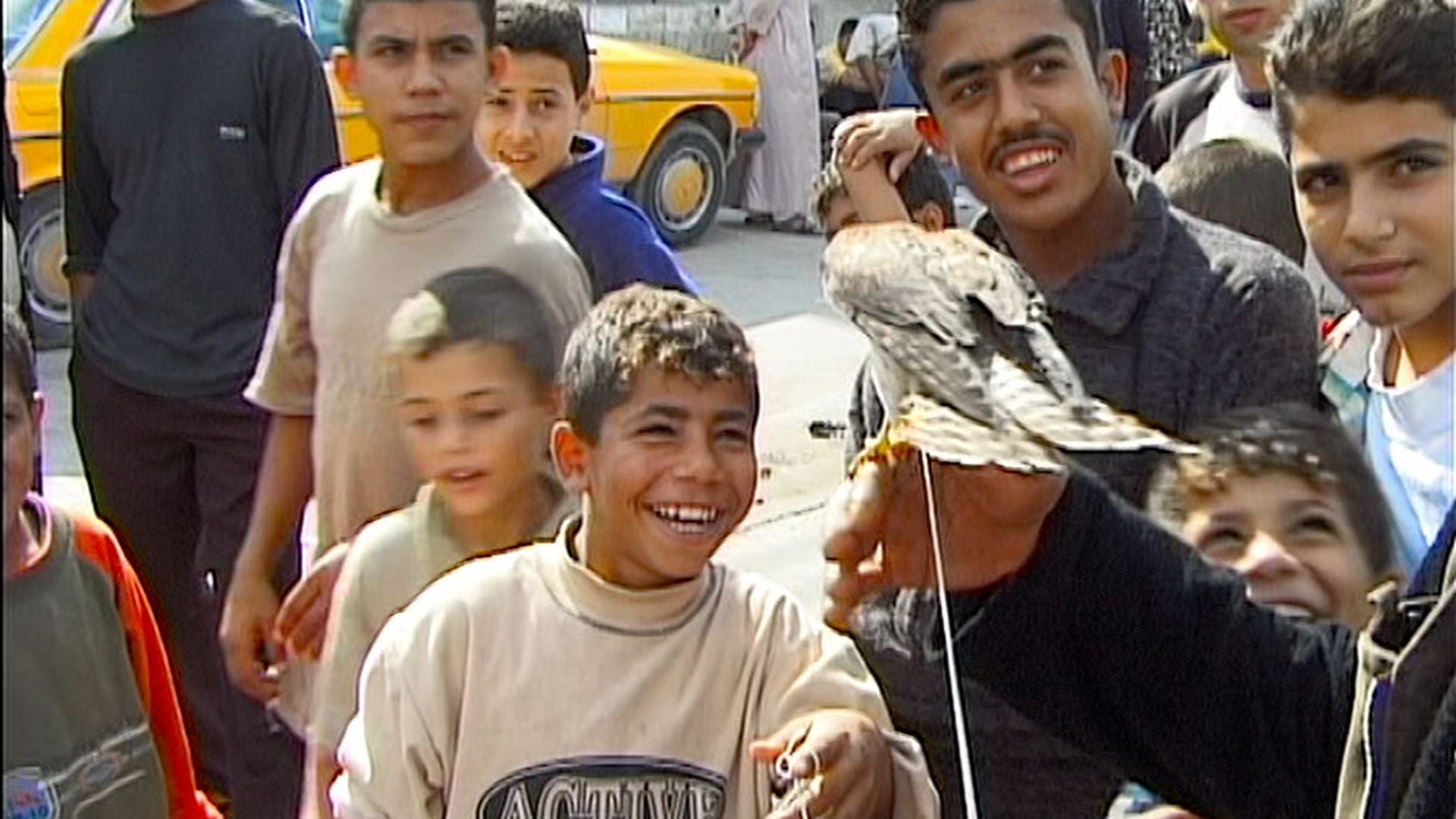
The footage was assembled from both Aljafari and his guide on the trip, a driver named Hasan. Large stretches of the film are shot from various seats in Hasan’s car, winding through streets, gazing at pedestrians. Outside the vehicle, Hasan frequently becomes the cameraman, filming the director as he interacts with Palestinians going about their daily lives.
Occasionally, a marker of Israeli oppression appears in the distance: A youth detention facility, a roadblock, a tank. On a couple of occasions, Hasan tells the director to hide his camera as the car approaches IDF soldiers.
The film barely introduces the purpose of Aljafari’s visit before becoming adrift in the lives of the people he meets. I don’t even recall Rahim’s name or his connection to the director being mentioned until near the end.
The most enduring images of With Hasan in Gaza are of children. Nearly everywhere he goes— the beach, the market, a residential neighborhood— a group of children seems to appear, asking for their picture to be taken. They freeze, smile for the camera, and then continue running around.
This stands in stark contrast to many of the adults Aljafari meets: Some want their faces hidden for fear of losing work visas, others casually recount stories of persecution or violence.
With Hasan in Gaza arrives amid the ongoing genocide in the very places Aljafari visited nearly a quarter century ago. The children here, the ones who have survived and remained in the country, now have disturbing, unspeakable stories of their own to share.
“It is really inevitable to think about what happened to all these people when you watch it,” Aljafari said.
Even in 2001, while roaming around Gaza comparatively freely, if still restricted, the filmmaker captured moments of everyday terror. During one especially harrowing sequence, Aljafari is positioned in the window of a residence, mortar and gunfire ringing out in the distance.
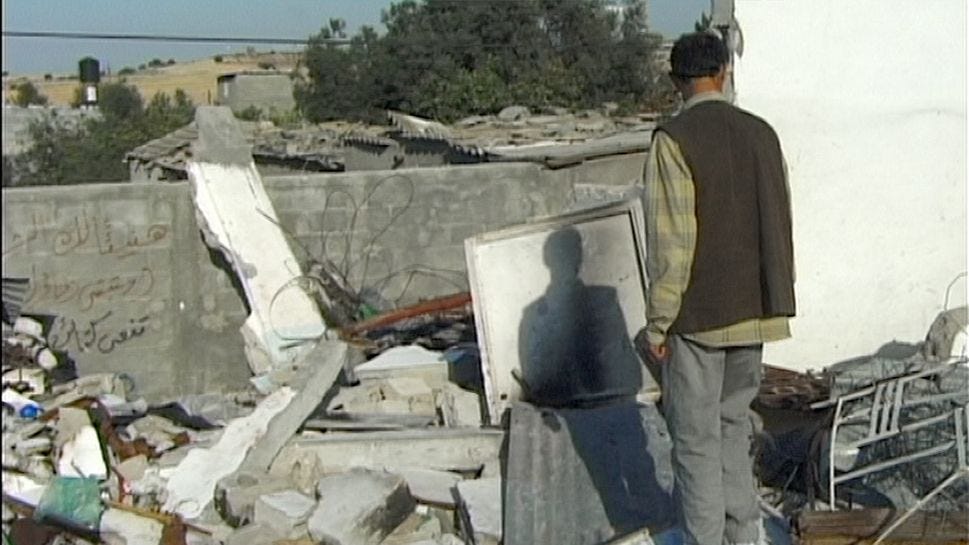
The camera flinches as Aljafari panics and looks around, and Hasan repeatedly reassures him: “Don’t worry, we’re too far to be hit.” This sequence goes on for at least 10 minutes, its impact heightened by a previous one where an enraged Palestinian woman gives a tour of her recently bombarded home.
These are the kinds of moments When Hasan in Gaza captures with a terrifying immediacy. A man returned to his homeland in an attempt to lay a haunting encounter from his past to rest. Instead of resolution, he and his driver travel through a place still under siege, traumatic moments like the ones he and his cellmate shared all those years ago still being created every day.
When Hasan in Gaza screens at the Vancouver International Film Festival on Oct. 10 and 12.