
Panic! At the Convent
On Michael Powell and Emeric Pressburger's 'Black Narcissus'

Let’s get this out of the way up front: Black Narcissus is one of the most visually ravishing films ever made.
Even by Technicolor standards, which in my opinion are roughly 300 times more beautiful than films shot in other ways, Michael Powell and Emeric Pressburger’s story of nuns, sexual awakenings, and colonial naivety is singular. The interplay of light and shadow, of unnerving close-ups and matte painting landscapes, is breathtaking from start to finish.
And the colors! The striking green of the mountain valley surrounding the film’s action, the shocking red of exposed hair, newly applied lipstick, or blood staining a nun’s white habit.
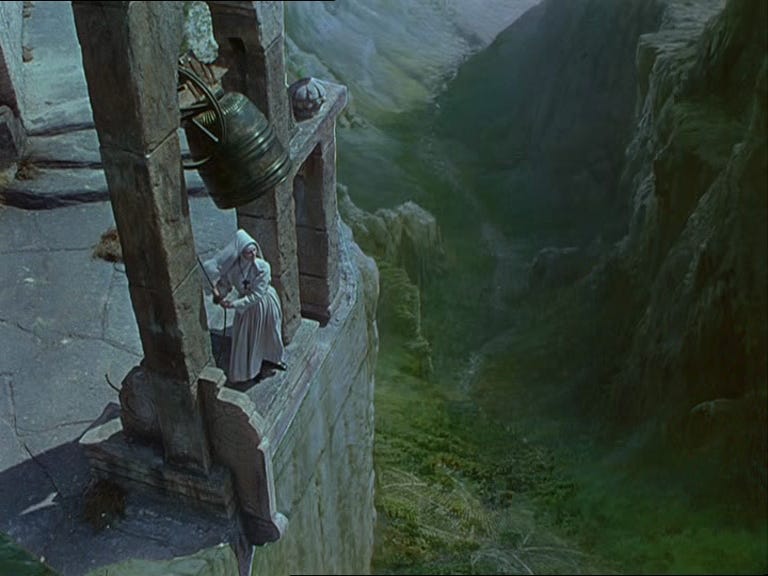
Black Narcissus’ unmatched formal beauty is all the more affecting because of the deep emotional and psychosexual currents roiling beneath the film’s ornate surfaces. Adapted from a novel by Rumer Godden, the film’s story and setting are excuses to tease out a group of Anglican nuns’ repressed desires, to isolate them from the world they know and the security of their everyday rituals.
The group of five British nuns is led by the young, blatantly ambitious Sister Clodagh (Deborah Kerr), who is placed in charge of a new nunnery at the behest of their reluctant Mother Superior, Dorothea (Nancy Roberts).
That recently established convent is in northern India, in the Himalayas. The building housing these women is a former harem situated on a steep cliffside; the closest village is a long way down. In this former house of pleasures, the pious women are relentlessly pummeled by wind, colorful, erotically-charged wall art, and a hunky British agent, Mr. Dean (David Farrar).
Often appearing shirtless and sweaty, Mr. Dean is a hilariously blatant temptation, exposed flesh surrounded by billowing habits and hungry stares. While Clodagh’s desire for Mr. Dean is tempered by her sense of duty, one of the sisters feels no such obligation.
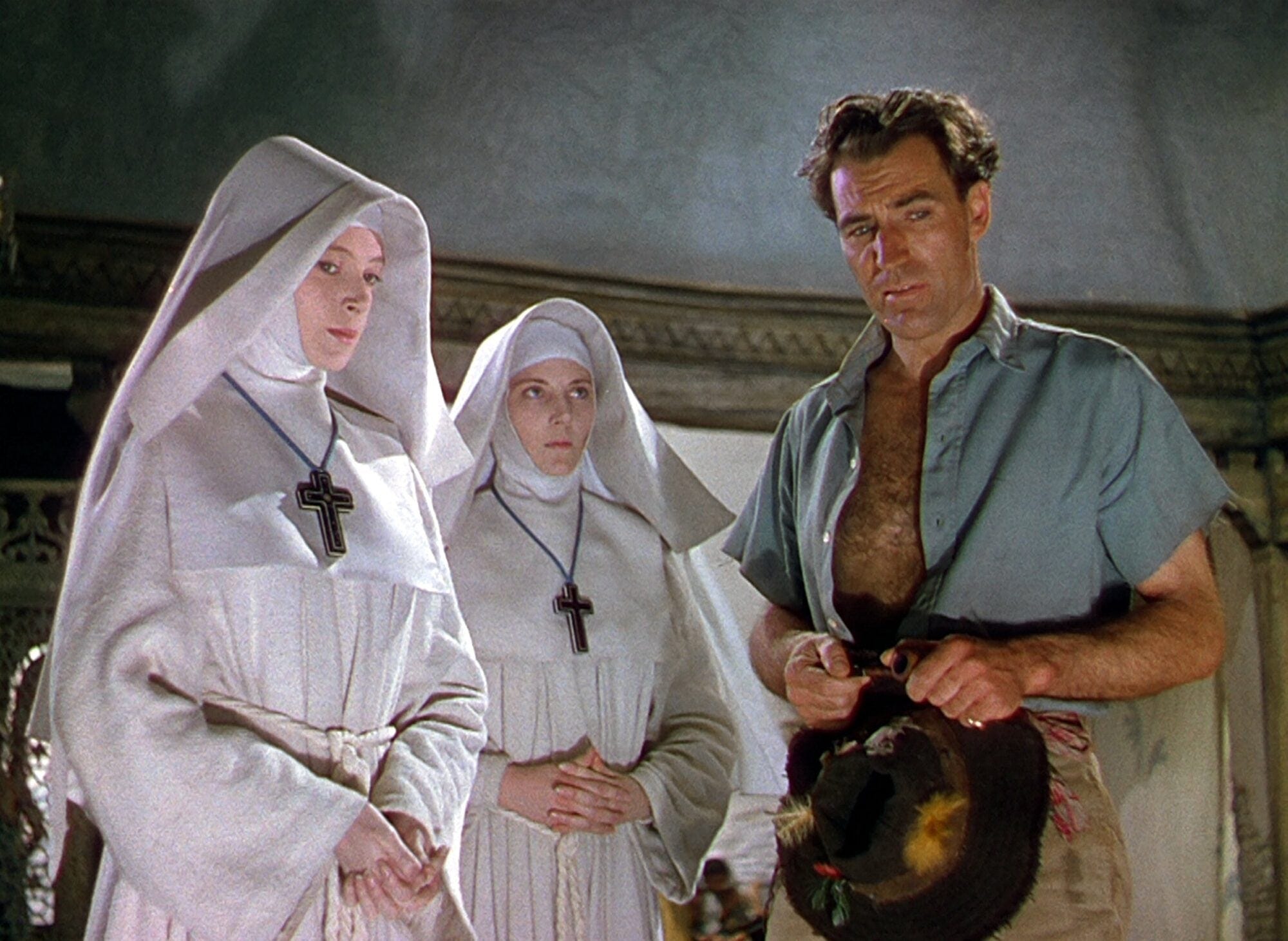
Sister Ruth (Kathleen Byron) is “sick” before the nuns make their way to India. Mother Dorothea insists that Clodagh take her along, that a sense of purpose might be just the medicine she needs to get well.
Tension between Ruth and Clodagh is established from the beginning, during Dorothea’s single, crucial scene. Clodagh is reluctant to bring her troubled Sister with them.
“She badly wants importance,” Mother Dorothea says.
”Do you think it’s a good thing to let her feel important?” Clodagh replies.
”Spare her some of your own importance… if you can.”
Dialogue in Black Narcissus rarely carries this kind of weight, and so the conflict it sets up shadows the rest of the film, even though it doesn’t come to a head until the final act. By the end, one of the Sisters will be driven mad by unfulfilled carnality, and the failed convent will serve as a symbolic end to British colonial rule.
